
What must
the device do?
Share voltage, current profile, event duration and available space. Include the operating environment and cycling duty where known. We can begin with incomplete information.
Cell prototyping · Available by discussion
Pouch-cell development, packaging and characterisation for application evaluation and research work. Begin with an electrical requirement, a physical constraint or a material that needs to become a testable cell.
Discuss a prototype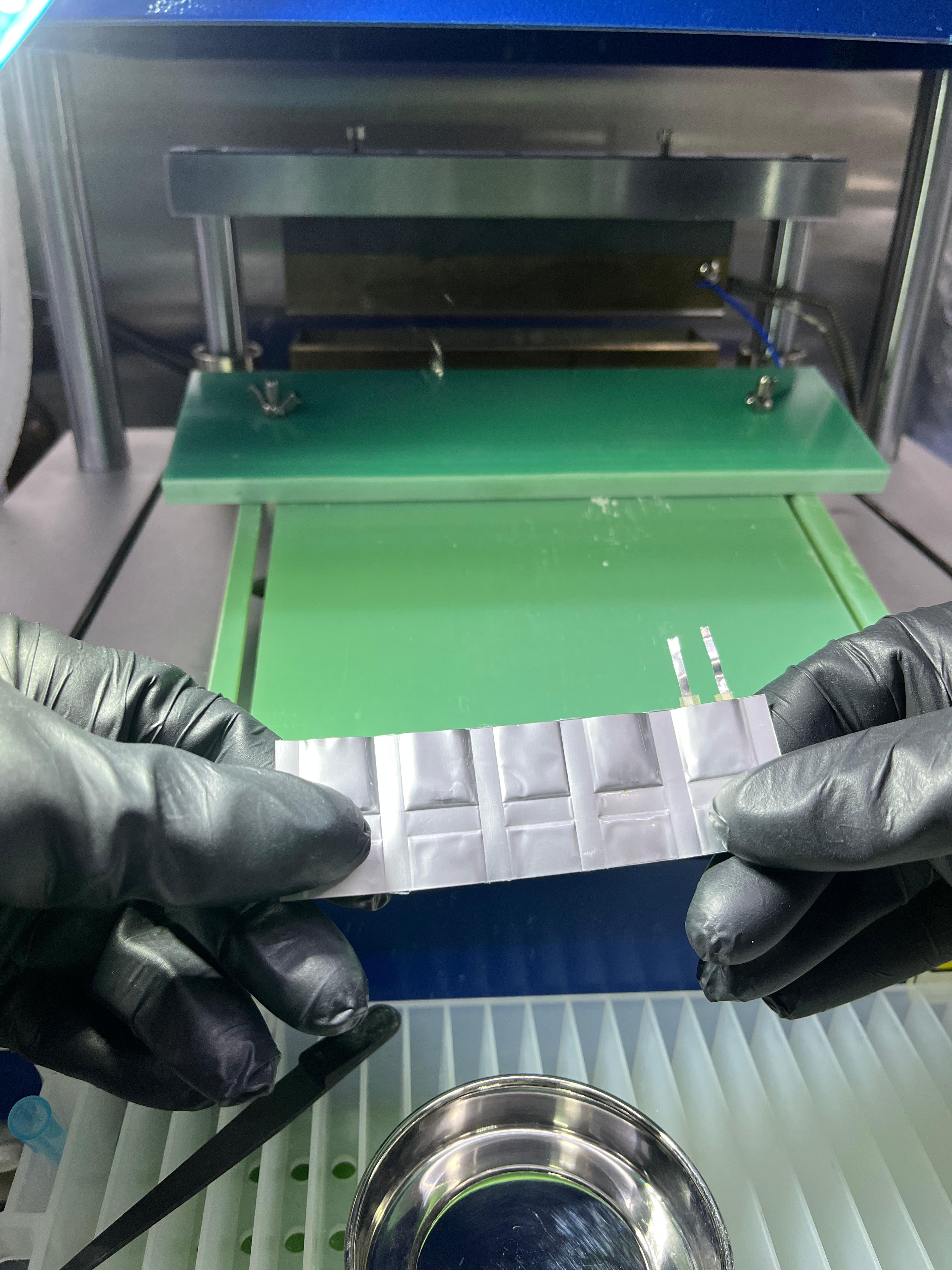
An engineering engagement
Share voltage, current profile, event duration and available space. Include the operating environment and cycling duty where known. We can begin with incomplete information.
Agree a scope for electrode processing, pouch assembly and electrical characterisation. The work depends on the technology, available process and intended application.
Consider capacitance or delivered energy alongside resistance, rate behaviour and ageing. Compare the result with the agreed duty and identify the next development step.
What to bring
You do not need a finished cell specification. Tell us what the device does, where the power constraint appears and the physical space available.
Prototype results describe a particular design under agreed conditions. Product qualification and production scope are established separately as the work progresses.
Start a conversation
An electrical requirement, a physical constraint or a material that needs to become a testable cell. Start with what you know.
Discuss a prototypecharlie@volfpackenergy.com